This site uses cookies.
Some of them are essentials while other help us improve your experience. Read Our Privacy Policy
July 26, 2026
Youth Sports Coaches Are The World’s Future With a Whistle
by Adam Hanft, Global Branding Expert, Strategic Advisor to Pixellot
Did a 19th century Frenchman anticipate the future of youth sports?
Yes.
Oui.
In 1831, Alexis de Tocqueville traveled through the United States. It was a new country with new ideas, and Alex – I can call him that because I have quoted him so many times – was struck by a surprising American instinct: the impulse to volunteer.
In Democracy in America, the culmination of his journey, he wrote “Americans of all ages, all conditions, and all minds are constantly joining together in groups.”
He witnessed volunteer organizations and associations of all kinds: created for commerce, education, religion, public safety and social improvement. Americans confronted a need and organized themselves around it. Tocqueville eventually called the ability to associate the “mother science” of democracy because so much of American life depended upon it.
We still come together
Flash forward. Despite the fact that it is almost 200 years later, and if you read the media, we are more divided than ever, the spirit of volunteerism, of coming together in pursuit of common goals, is very much alive.
As many as 80 million Americans volunteer every year, contributing more than five billion hours of service, with an estimated economic value of over $200 billion. More than half of Americans also helped neighbors informally, outside the structure of an established organization.
They stock food banks, assist museums, serve on school boards, maintain trails, mentor children and help care for national parks. If those volunteers disappeared, many institutions would either have to shrink, charge more, hire millions of additional workers or stop functioning altogether.
Youth sports: ground zero of volunteerism
One of the largest expressions of this volunteer spirit takes place on fields, courts, diamonds, tracks and rinks across the country.
Here at Pixellot, we are continually blown away by the unwavering dedication of those committed to the coaching of youth sports, and its extraordinary infrastructure: Little League, Pop Warner, AYSO, recreational leagues, travel and club teams, middle-school athletics, high-school sports and the vast collegiate system.
Volunteer coaching exists around the world, of course. Norway, for example, has more than 12,000 sports clubs run almost entirely by volunteers. The American version, however, is distinctive in its scale, variety and deep integration into community life. Coaching is woven into the rhythm of families in suburbs, small towns, cities and rural communities.
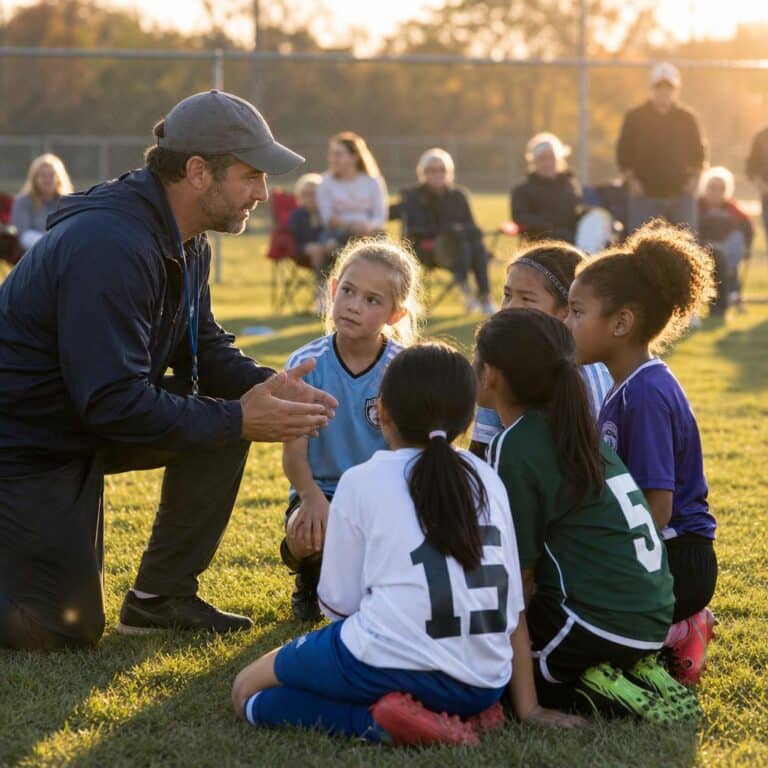
The Aspen Institute’s Project Play describes coaches as “the backbone of youth sports”, functioning as mentors, role models and sources of inspiration. They teach technique, but their larger contribution is behavioral. They guide children to practice when they would rather quit – I’ve written about the quitting crisis for our blog – to accept correction without collapsing, compete with respect, depend upon teammates and honor their commitment.
The spirit of volunteerism also extends beyond coaches themselves. The stats pay living homage to Tocqueville’s insights: Sixty-two percent of youth-sports parents volunteer in some capacity, averaging more than four hours a week as team parents, organizers, drivers, scorekeepers and league volunteers.
Youth sports are sustained by a hidden labor force operating after work, before breakfast and throughout the weekend.
We’re putting too much pressure on our coaches
They are abandoning the field, too, just when we need many more of them. In a world where anxiety is already blasting you from all sides, why spend time in a volunteer activity that adds to life’s toxicity? Consider that 69 percent of youth sports coaches surveyed reported that they were under stress.
The reasons are diverse. The same survey found parents are often the culprit, with two-thirds reporting that moms and dads were consistently critical of their coaching, with sideline outbursts and even confrontational emails. It’s gotten so ugly that coaches routinely take their frustrations to Reddit. “I love coaching but sometimes parents make me hate it” vents a basketball coach in one of many Subreddits on the subject.
What’s more, adults have limited free time, work longer hours, and also enter the ecosystem with a training deficit. Of America’s estimated 6.5 million youth coaches, fewer than one in five have been trained in effective motivational techniques, and only one in three report training in sport skills or tactics. The system needs more coaches, and it needs to give those who step forward a better chance to succeed. The underlying research can be found here: Project Play: Train All Coaches.
I worry about a loss of community
The problem goes beyond coaches, though. Look what’s happening with our local volunteer fire departments. The United States has 29,452 fire departments. Of those, 18,873 are entirely volunteer and another 5,335 are mostly volunteer. These dedicated souls save local communities an estimated $46.9 billion annually. Yet we’ve been losing approximately 12,000 firefighters a year since 2008, falling from about 827,000 volunteers to roughly 635,000.
This is not just a U.S. problem; volunteerism is on the decline around the world.
Here’s what’s going through my mind: We have built essential institutions on donated time while doing surprisingly little to protect the supply of that time. The struggle over the lack of work-life balance has a knock-on effect with youth sports and local firefighting that is under-acknowledged.
We need to build and invest in the ecosystem
Let’s start with some recognition. Professional coaches are celebrated, analyzed and paid millions. Volunteer youth coaches often receive a plaque at the end of the season, assuming someone remembers to order it. We should give them more public credit, create meaningful recognition programs and remind communities of the value they generate.
Corporate America also has a larger role to play. Local car dealers, restaurants, banks and insurance agencies have supported youth teams for generations. Their banners hang on outfield fences, and their names appear on uniforms because they understand the relationship between strong businesses and strong communities.
America’s largest corporations benefit from the same civic infrastructure on a much greater scale. Coaches help develop the discipline, resilience, teamwork and accountability those companies later seek in employees. Corporate investment in youth sports should be understood as workforce an community development.
Our role at Pixellot
At Pixellot, where our systems produce and stream an average of more than 100,000 sporting events every month, we have an unusually intimate view of the essential role coaches play.
Each of those games is about moments – moments that celebrate athletes and the coaches who inspire them. And standbye: Pixellot will soon be launching a platform that will transforms the youth sports experience by making it available on mobile phones with the same power and impact as professional sports.
Entire games and dramatic clips will be viewable, shareable and savable with impeccable resolution. Globally!
The era of soft monetization is also coming
Youth sports and the coaches who make the system work need money. There are no two ways about it. One way to create more resources is through what I have called soft monetization; developing advertising and sponsorship opportunities in ways that respect the experience rather than intrude upon it.
Families are already gathering around youth-sports content. Grandparents watch from other states. That attention has value, but monetizing it requires restraint. Sponsors prudently integrated into scoreboards, replays, and player highlights can help finance the league without turning youth sports into a cluttered imitation of professional sports.
The revenue can support equipment, facilities, scholarships, coach education and the digital systems league increasingly require. It can reduce the financial and administrative burden placed on the same small group of parents. Properly designed commercial participation becomes another form of community support.
Youth sports and coaching tell a broader story
Coaches create the next generation at ground level. They teach discipline when no one is handing out grades, resilience in public spaces, commitment when quitting would be easier, and teamwork when individual glory is more tempting.
America, and many other nations, depend upon that work. It is time we recognized its economic value, and invested in the people who make it possible. Every generation inherits its values from people who volunteered to teach them.
Parents begin the work. Teachers reinforce it. Coaches make it visible.