This site uses cookies.
Some of them are essentials while other help us improve your experience. Read Our Privacy Policy
July 06, 2026
Youth Sports Needs More Kids to Start — and Fewer Kids to Quit
by Adam Hanft, Global Branding Expert, Strategic Advisor to Pixellot
Youth sports sure look healthy from just about any sideline in America. Weekends are alive with activity. The fields are full, tournament complexes are packed, parents are dutifully shlepping from one game to the next.
The New York Times reports that youth sports are a $40B industry; the Aspen Institute’s Project Play notes that “the average U.S. sports family spent $1,016 on their child’s primary sport in 2024, a 46% increase since 2019.”
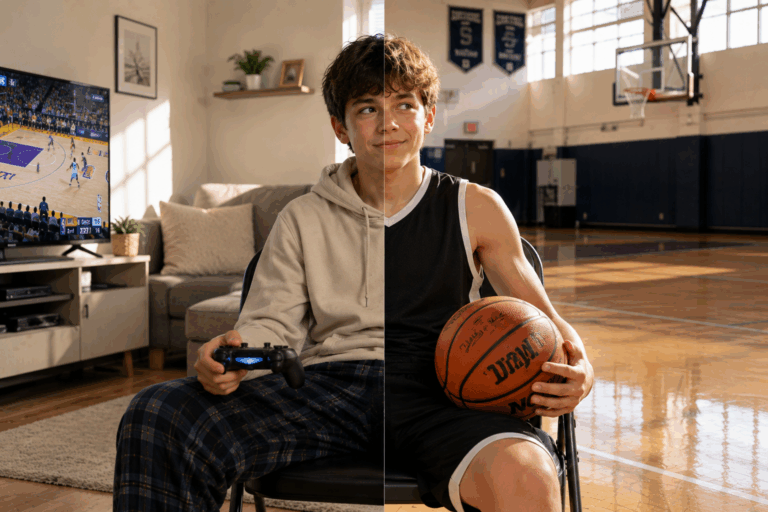
But the stands and the sidelines are not the scoreboard. The real measure of youth sports is not just participation, but ongoing engagement: How many children start, how many continue, and how many reach their adolescence still believing that sports are an important part of their lives?
On that measure, the story is more complicated and more urgent.
The Aspen Institute’s State of Play 2025 reports that 65% of children ages 6–17 tried a team sport at least once in 2024, the highest level tracked by the Sports & Fitness Industry Association since at least 2012. That’s an increase of 6%-7%, and it’s encouraging.
But there’s bad news attached to the positive stats.
The engagement rates of teenagers ages 13–17 went south, with regular participation dropping 3% in 2024. Which means more kids are sampling sports, but fewer teenagers are making them a sustained and regularized part of their lives.
That downward trajectory is dispiriting to those of us who care deeply about youth sports. We have more trial, in marketing terms, than we have stickiness. And stickiness is what matters.
The crisis is not simply that too few kids start. It is that too many stop before sports can do their best work.
A child who stays with sports gets the deeper benefits: confidence, friendships, discipline, resilience, physical literacy, and the experience of being part of something larger than themselves.
The stakes are larger than wins and losses. Federal guidelines recommend that children and adolescents ages 6–17 get at least 60 minutes of moderate-to-vigorous physical activity daily, yet CDC data from 2023 show that only about one in four high school students met that standard. The same CDC summary reported that just over half of high school students played on a sports team.
This sedentary lifestyle of our students is also reflected in the increasing use of GLP1 drugs among children, as this recent Wall Street Journal article noted.
Youth sports is one of the most powerful engines we have for creating healthy habits, social connection and community belonging. Engines, however, need fuel, access and maintenance. Yet the system has been optimized around competition, tournaments and families already deeply invested in sports. While the broader participation catalysts are not working as they should. Here are my proposals for changing that trajectory.
Fuel the Engine by Lowering the Costs of Staying In
The first participation problem is economic. Earlier I referenced how much the average sports family spends per annum. That makes youth sports unreachable for many, turning a community-based childhood experience into a financial test.
Recent Gallup data shows the financial stress that American families are under, while a slice at the top is thriving. Aspen’s survey found that the wealthiest families spent $1,471 more per year on a child’s primary sport than families earning under $50,000.
Society will lose if youth sports becomes an elite activity. The most important thing we can do to address this is through school budget allocations. The top of the funnel.
Typically, athletic programs receive just 1%-3% of the total education budget, yet are expected to serve more than half of the student population.
As a result, coaches and others resort to booster clubs, fundraising platforms and other mechanisms. That is just not tenable.
We need to lower the financial burdens by enabling communities to invest in stronger scholarship systems, equipment libraries, lower-cost recreational pathways, and local fund-raising that uses sophisticated crowd-funding platforms.
We also need to help the youth sports ecosystem monetize with efficient yet sensitive advertising; it’s something I wrote about in my last blog post.
I’m also intrigued by credit cards that help parents pay for youth sports, and help booster clubs raise money. Hopefully, entrepreneurs will innovate to help close the funding gap.
Fuel the Engine By Making Sports Worth Coming Back To
Family budgets matter, but a teenager does not quit only because of cost. They quit because they are burned out, bored, injured, and socially disconnected.
The participation problem is therefore also an experience-design problem.
These are multi-dimensional realities, requiring equally expansive solutions.
We need more local role models and hero archetypes to inspire participation. Youth sports should tell those stories relentlessly, because attainable aspiration is one of the most underused tools in participation. Social media like TikTok, YouTube shorts and Instagram can be used to tell these positive stories, but coaches and administrators and parents need to become more fluent in digital storytelling.
Let’s be real; screens are not a moral failure and they aren’t going away. The American Academy of Pediatrics found that tweens average 5 hours and 33 minutes of screen media per day, with teens averaging 8 hours and 39 minutes.
Let’s make social media our friend, using modern media habits to deepen sports participation and individual recognition. Move to short highlights, teachable clips, player interviews, coach explanations, team moments, amusing sideline rituals, community pride and shareable stories that make a child feel part of a living culture.
Kids stay when they feel seen. They quit when the sport becomes only pressure, logistics and performance evaluation.
At Pixellot we are working on the next generation of social sports, and it will be big and transformative.
Fuel the Engine By Keeping Sports Alive
Family budgets matter, but a teenager does not quit only because of cost. They quit because they are burned out, bored, injured, and socially disconnected.
The participation problem is therefore also an experience-design problem.
These are multi-dimensional problems, requiring equally expansive solutions.
We need more local role models and hero archetypes to inspire participation. Youth sports should tell those stories relentlessly, because attainable aspiration is one of the most underused tools in participation. Social media like TikTok, YouTube shorts and Instagram can be used to tell these positive stories, but coaches and administrators and parents need to become more fluent in digital storytelling.
Let’s be real; screens are not a moral failure and they aren’t going away. The American Academy of Pediatrics found that tweens average 5 hours and 33 minutes of screen media per day, with teens averaging 8 hours and 39 minutes.
Let’s make social media our friend, using modern media habits to deepen sports participation and individual recognition. Move to short highlights, teachable clips, player interviews, coach explanations, team moments, amusing sideline rituals, community pride and shareable stories that make a child feel part of a living culture.
Kids stay when they feel seen. They quit when the sport becomes only pressure, logistics and performance evaluation.
At Pixellot we are working on the next generation of social sports, and it will be big and transformative.
The Real KPI
Youth sports do not need another lecture about character. The hard work is building systems that get more kids in, keep more kids from dropping out, and make it easier for young athletes to remain connected to sports as they grow older and they have more distractions in their lives.
Participation is the KPI that should govern the next decade of youth sports. Not just registrations. Not just tournaments. Not just views. Actual sustained participation.
The organizations that understand this will lower barriers instead of simply raising fees. They will celebrate progress instead of only championships. They will use media to strengthen belonging instead of treating content as an afterthought. They will preserve games because memory, recognition and improvement are all part of why kids come back.
Starting is easy. To stick is the trick.